
in Portland OR and Vancouver WA areas
A well-built walkway shapes how people experience your property from the moment they arrive. It guides visitors through your garden, protects your lawn from foot traffic, and adds lasting value to your home. So when you invest in professional walkway installation, you create a path that looks great and holds up through every Pacific Northwest season.
Masonry Waterproofing, and Drainage Masters specializes in putting in a paver walkway that performs as well as it looks. Our team handles every step of the project, whether you need a simple entry path or a winding garden route. From the first site visit to the final sweep, we focus on getting the details right so your walkway stays level, drains properly, and keeps its color for years to come.
Our Walkway Installation Process
- Every project begins with a site assessment. Our team examines the subgrade to determine soil conditions, drainage patterns, and any slope that needs attention. This information shapes every decision we make moving forward.
- Once we know what we’re working with, we prepare the base. Pavers are installed over compacted base rock, never on top of existing concrete or loose soil. We excavate to the proper depth, remove unstable material, and build up layers of crushed rock that we compact in stages.
- For sloped or uneven terrain, we adjust the base depth and layout to match the grade. This prevents the pavers from shifting over time and directs water away from your foundation and landscaping. Proper drainage is especially important in our wet climate, where standing water can undermine even well-laid paths.
- When the base is ready, we begin laying the pavers according to the pattern you’ve chosen. Each unit is placed with consistent spacing, then locked into position with edge restraints. We fill the joints with polymeric sand that hardens when wet, binding the pavers together while still allowing flexibility.
- If your project involves existing landscaping, we work around beds, trees, and edging with proper spacing and protection. Excavation happens carefully to avoid root damage or disruption to your plants. Most established gardens can stay in place while we install your new walkway right alongside them.
Brick vs. Paver vs. Natural Stone: Which Is Right for You?
Brick offers a timeless, classic appearance that suits traditional homes and historic properties. Made from fired clay, brick walkways age gracefully and develop character over time. The warm red and brown tones blend naturally with gardens and older architecture. Brick holds up well in our climate when installed over a proper base, though it may show wear faster than harder materials in high-traffic areas.
Concrete pavers give you the widest range of design options. Manufacturers produce these units in countless shapes, sizes, and colors. You can replicate the look of brick or natural stone at a lower cost, or choose bold modern designs that stand out. Concrete pavers are typically denser than brick, making them highly durable for everyday foot traffic. They resist staining and hold their color with minimal care.
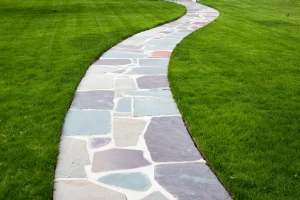
Natural stone includes materials like flagstone, bluestone, and slate. These walkways have a one-of-a-kind appearance because each stone is unique. Natural stone works especially well in garden settings where you want an organic, relaxed feel. Installation requires more skill because the irregular shapes must be fit together carefully. Natural stone generally costs more than brick or concrete pavers, but many homeowners find the investment worthwhile for the distinctive look.
We at Masonry Waterproofing, and Drainage Masters have worked with all three materials extensively and can help you weigh the options based on your specific situation. When you contact us, we’ll discuss your goals, your budget, and the style of your home.
Need an Estimate for
Contact us now to schedule your in-person consultation!
Signs Your Existing Walkway Needs Replacing
Sometimes a walkway just looks tired and outdated. Other times, the damage goes deeper:
- Cracks and fractures often signal underlying problems. Small hairline cracks in concrete may not seem serious, but they let water penetrate the surface.
- Uneven surfaces and lifted sections create tripping hazards and pooling water. When a walkway settles unevenly, the base beneath it has likely failed.
- Crumbling edges and spalling indicate that the material itself is breaking down. Concrete exposed to years of moisture and freeze cycles eventually loses its surface layer.
- Drainage problems show up as standing water, muddy borders, or erosion along the sides of the path. A properly built walkway directs water away from the surface and into surrounding landscape areas.
If your walkway shows any of these signs, a professional evaluation can tell you whether repairs will hold or whether replacement makes more sense. In many cases, installing a new paver walkway costs less over time than repeatedly patching a failing surface.
Benefits of a New Walkway
Many homeowners start their search for a new walkway because their current path has become a problem. Maybe the concrete has cracked and shifted. Perhaps puddles form after every rain, making the surface slick and unsafe. Or the worn-out look just doesn’t match the rest of your property anymore. Brick and paver walkways solve these common issues in ways that poured concrete simply cannot.
- When you choose brick walkway installation or opt for concrete pavers, you get a surface made up of individual units. This design gives the walkway natural flexibility.
- Instead of cracking under pressure or heaving with frost, each paver can shift slightly with the ground beneath it. The result is a stable, even surface that handles the Pacific Northwest’s variable soils and wet conditions without breaking apart.
- Beyond durability, brick and paver walkways offer design choices that work with any home style. You can match your existing architecture with classic red brick, or create a modern look with sleek gray pavers. Shapes like rectangles, hexagons, and fan arcs combine with different color blends to give you full control over the finished appearance. Pattern options like herringbone or running bond add visual interest and define clear borders along the path.
- Maintenance stays simple too. Routine sweeping clears dirt and debris, while a quick rinse with the hose removes pollen and spills. You won’t need expensive sealants to keep the surface looking fresh.
- And when damage does happen (maybe a heavy object chips a single paver), repairs are straightforward. You lift out the broken unit, set a matching replacement, and the job is done in a single morning. No cutting, no mixing concrete, no waiting for cure times.
Why Work With Masonry Waterproofing, and Drainage Masters?
Our climate presents challenges that contractors from drier regions may not fully appreciate. Heavy rainfall, extended wet seasons, and freeze-thaw cycles all affect how walkways perform over time. Hiring a local paver walkway contractor means working with a team that understands these conditions and builds accordingly.
We know that drainage is essential. Every walkway we install moves water away from the path and away from your foundation. We select base materials that drain freely and compact properly, even in our clay-heavy soils. Our installation methods account for seasonal ground movement, so your walkway stays level year after year.
Experience also matters when working around mature landscaping. Many Pacific Northwest properties feature established gardens with valuable plants, trees, and shrubs. Protecting these features during construction requires planning and care. We take the time to work around what’s already growing, so your new walkway enhances your landscape instead of disrupting it.
Let Us Handle Your Walkway Project
Putting in a paver walkway is an investment in your property’s appearance, safety, and value. Done right, your new path will serve your household for decades.
Our team brings years of experience in brick walkway installation, paver walkway installation, and natural stone work. We handle every phase of the job, from initial consultation through final cleanup.
Contact us today to schedule a site visit and learn what’s possible for your home.